The key facts
- ADB allocates $200 million to modernize Uzbekistan's electricity distribution networks
- 60 key substations will be reconstructed, digital control systems will be introduced
- Connection of at least 3.3 GW of renewable energy and a reduction in emissions of ~23 thousand tons of CO2-equivalent per year is expected
$200 Million Agreement
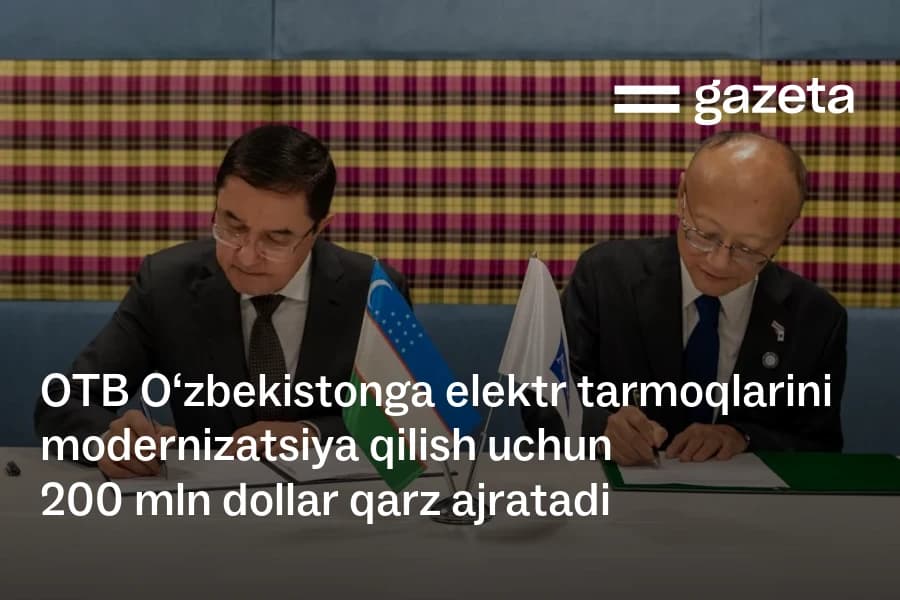
The Asian Development Bank (ADB) will provide Uzbekistan with a $200 million loan to modernize the electricity distribution system, reduce network losses, and improve the reliability of power supply amid growing demand. The agreement was signed on October 15 by ADB President Masato Kanda and Deputy Prime Minister, Minister of Economy and Finance of Uzbekistan Jamshid Kuchkarov. Publications differ on the location of the signing: the Uzbek-language version of Gazeta.uz reports that the deal was signed in Bangkok (Thailand), while the Russian-language version says it was signed at ADB headquarters in Manila.
Program Content
The program provides for the reconstruction and modernization of 60 key electricity substations of the distribution network across the country, the introduction of digital grid control systems, as well as strengthening the capacity of JSC 'National Electric Grid of Uzbekistan' in network operation and management. The tasks also include developing staff technical skills, strengthening management and financial control systems, improving qualifications, and expanding women's participation in the energy sector.
Expected Results
According to the ADB, economic growth, urban expansion, and increased electricity consumption are increasing the load on the grids, while outdated infrastructure, electricity losses, and equipment overload reduce the reliability of power supply and make it difficult to connect new renewable energy capacity. The program is expected to reduce losses, decrease transformer overload, and create conditions for connecting at least 3.3 GW of renewable sources. Greenhouse gas emissions are planned to be reduced by approximately 23 thousand tons of CO2-equivalent per year.
Quote and Project Status
'Ensuring a reliable power supply is one of the key obligations of a modern economy to the people,' said Masato Kanda, adding that strengthening the grids will allow more reliable supply to households, businesses, and government institutions and transmit more energy from renewable sources. This is the ADB's first energy project under the ADB and World Bank Framework Mutual Reliance Mechanism (FMRF), which allows the banks to use each other's assessments and reduce transaction costs, as well as the first results-based financing program in Uzbekistan's energy sector. The ADB acts as the lead creditor; according to the bank, World Bank management planned to submit a proposal for additional financing of $100 million to its board of directors for approval by the end of the month.
Context
Since 2010, the ADB has provided financing and guarantees to Uzbekistan's energy sector totaling more than $3.4 billion. The program serves the goals of the 'Uzbekistan — 2030' strategy and is implemented within the framework of the ADB and Uzbekistan partnership strategy for 2024–2028, which includes decarbonization of the economy, modernization of energy infrastructure, expansion of renewable energy use, and reduction of fossil fuel subsidies. In May, the ADB announced an initiative to mobilize $50 billion by 2035 to integrate power systems in the Asia-Pacific region and expand cross-border electricity trade.


