The key facts
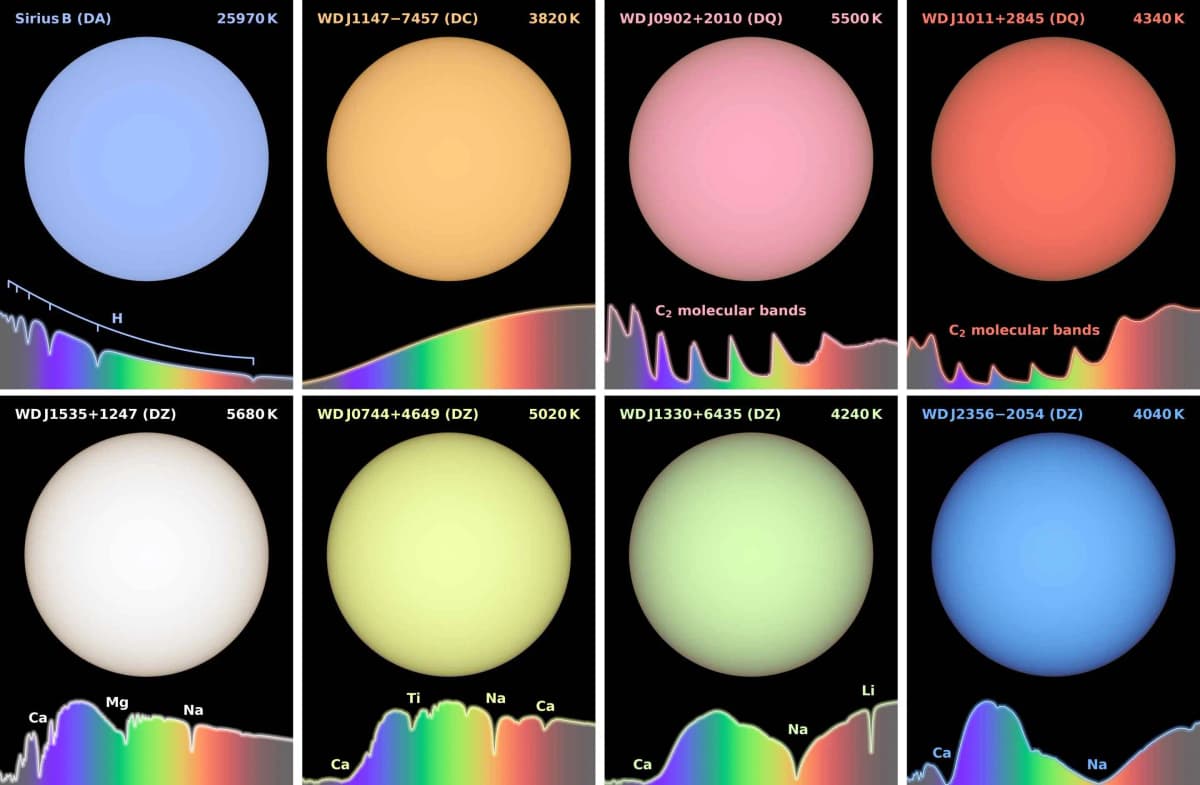
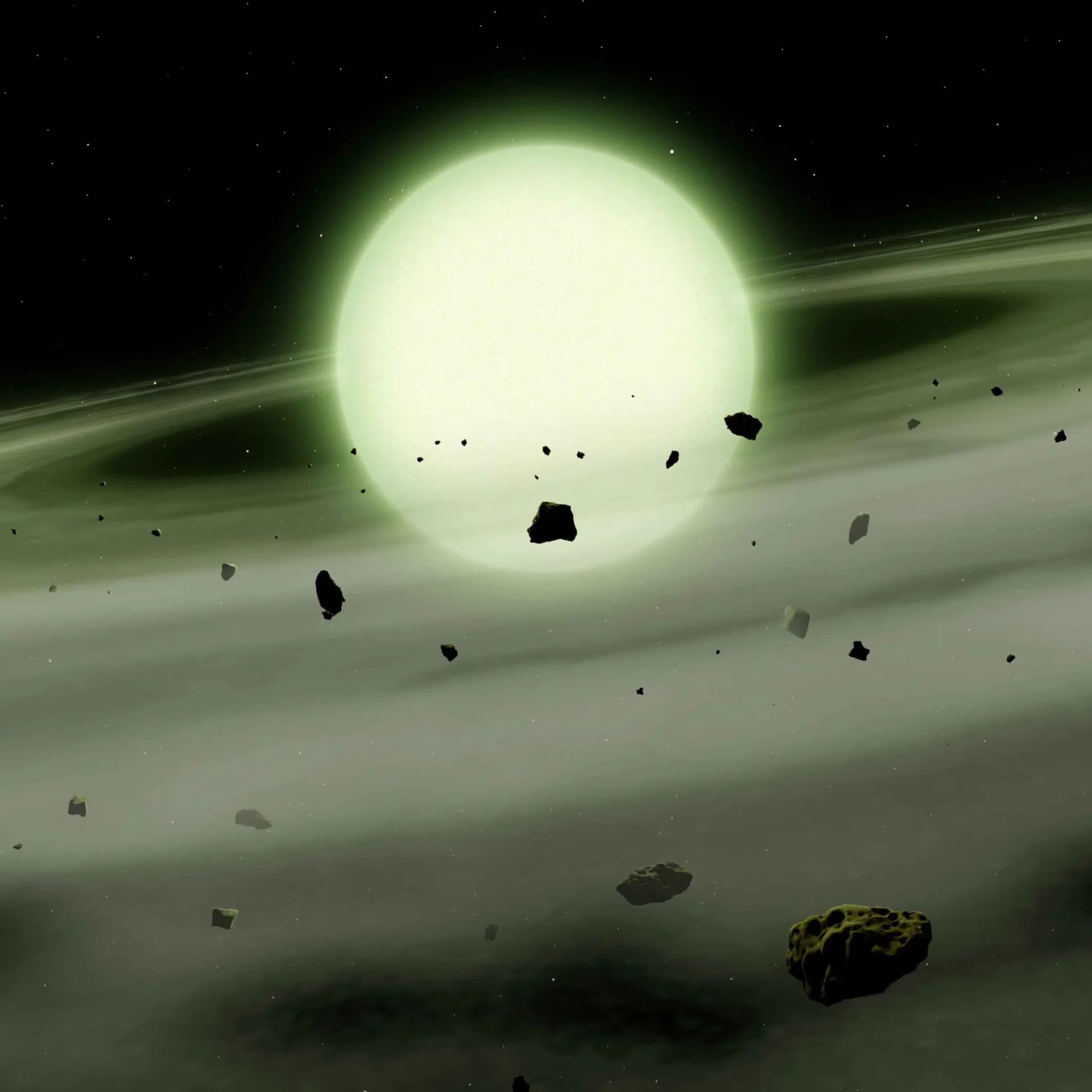
- The white dwarf WD J1330+6435, with a temperature of ~4000 °C, should appear light green due to the absorption of light by sodium and calcium in its atmosphere.
- The star's age is estimated at about 8.4 billion years, of which about 6 billion were spent in the white dwarf state.
- Only about 3.4% of the studied white dwarfs have a color noticeably different from white.
A green 'white' dwarf
Astronomers analyzed the radiation of white dwarfs at different wavelengths using digital models that simulate human vision. This is not an ordinary photograph of a green star: the calculations were aimed at determining what color the object would look like when observed from a close distance. The results are published in the journal RAS Techniques and Instruments.
Why the star is green
White dwarfs are ultra-dense objects at the final stage of evolution of stars like the Sun: their size is close to Earth's, and their mass makes up a significant portion of the solar mass. The color of ordinary stars mainly depends on temperature, but in white dwarfs the ultra-dense atmosphere and the chemical elements it contains can strongly absorb individual parts of light, creating unusual shades.
Data on WD J1330+6435
The temperature of WD J1330+6435 is about 4000 degrees Celsius — a star with such a temperature would usually look reddish-orange. However, sodium in this dwarf's atmosphere absorbs orange rays, and calcium absorbs violet ones. According to the model, the human eye perceives the remaining radiation as a light green shade. The star's total age is estimated at about 8.4 billion years, of which about 6 billion were spent in the white dwarf state.
Other unusual colors and their rarity
The study also noted other unusual shades: some carbon-rich white dwarfs may look pink or red-violet, while cooler ones with a hydrogen-helium atmosphere may look turquoise or bluish. Nevertheless, such colors are rare: only about 3.4% of the studied white dwarfs were found to have shades noticeably different from white. Despite the name 'white dwarf,' most stars in this category have a color far from white.