The key facts
- In 2027, 100 mahallas of Tashkent will be renovated based on the '15-minute mahalla' principle, and 400 by 2030, creating 130,000 jobs
- The pilot project covers four mahallas of the Yashnabad district with an area of 75 ha and 18,386 residents
- By 2030, 126,000 school places and 40,000 kindergarten places will be created in the capital; the Uchtepa City project was presented with $1 billion in investments at the first stage
Presentation of mahalla renovation projects
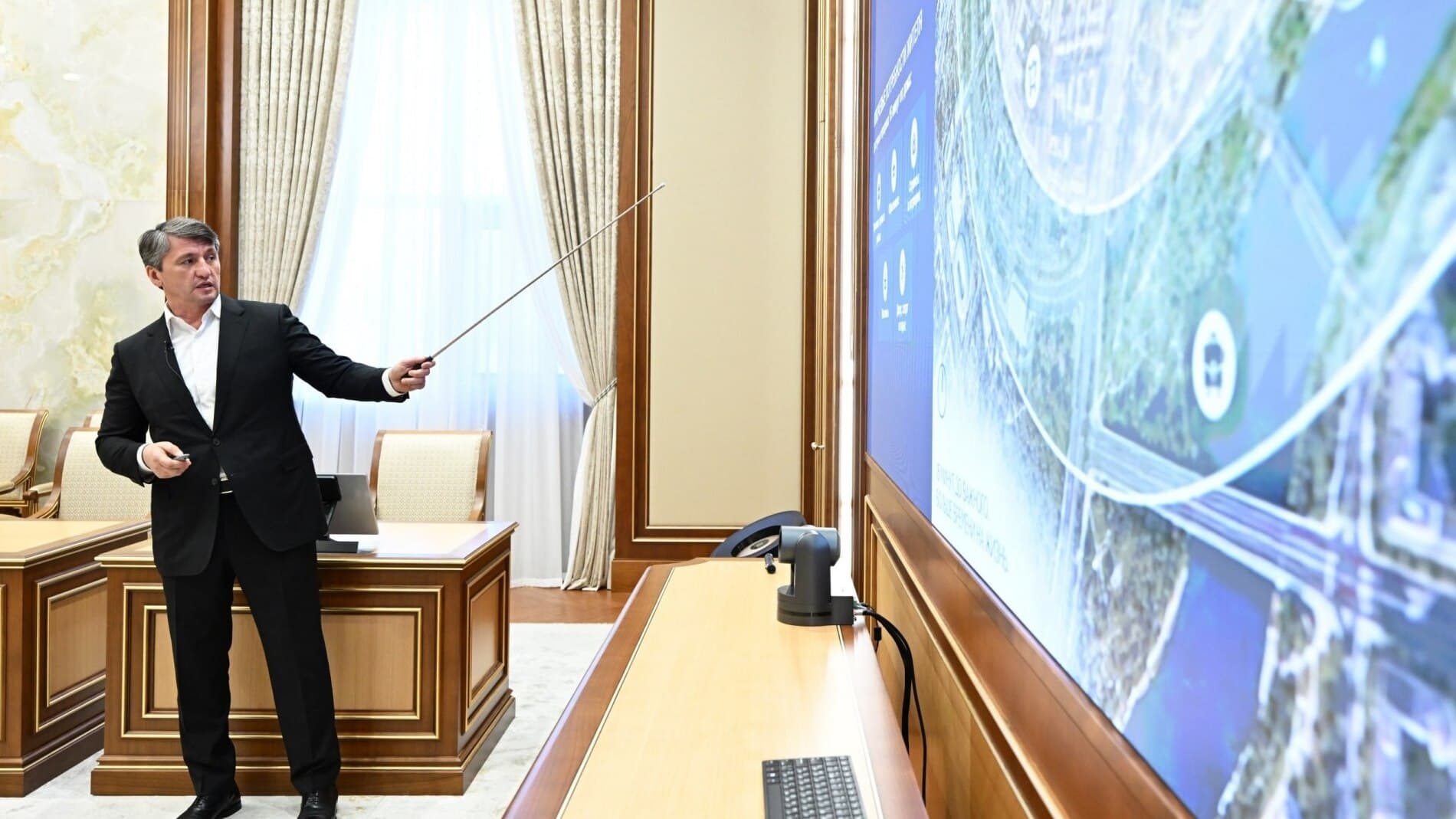
On October 14, President of Uzbekistan Shavkat Mirziyoyev reviewed a presentation of projects aimed at improving mahallas, building new schools and kindergartens, and developing Tashkent's urban environment, the presidential press service reported. The renovation is based on the '15-minute mahalla' principle: retail outlets, consumer service facilities, educational and medical institutions, recreation and sports areas must be within walking distance of housing. According to the plan, 100 mahallas in the capital will be comprehensively renovated in 2027, and 400 by 2030.
Pilot project in the Yashnabad district
One of the first projects presented was the comprehensive renovation of the 'Vatandosh', 'Mokhinur', 'Al-Bukhari' and 'Tong' mahallas in the Yashnabad district, with a total area of 75 hectares, home to 18,386 people. Plans include expanding green zones, building a three-kilometer walking alley, renovating children's and sports playgrounds, and constructing a multifunctional sports facility. By expanding existing schools, 2,000 additional student places will be created, four kindergartens with 540 places and three clinics will be organized. Also planned are the renovation of the facades of 76 buildings and utility networks, moving cars outside courtyards, renovating public transport stops, creating safe pedestrian and bicycle paths, improving street lighting, increasing the number of waste collection points, as well as creating retail facilities, cafes and social spaces.
Scale of the program and jobs
As part of the renovation of 400 mahallas, plans include modernizing heating, drinking water supply, sewage, electricity and gas supply systems, as well as lighting, roads, sidewalks, facades of apartment buildings and courtyard infrastructure. The number of trees and shrubs per resident is intended to be brought in line with international standards. By 2030, 130,000 new jobs are expected to be created in these mahallas, including 22,000 in 100 mahallas in 2027. To implement the projects, banks will establish a system for developing and launching 'conveyor' projects.
Schools and kindergartens
Special attention is given to the shortage of places in schools and kindergartens. By 2030, 126,000 new student places are planned to be created in Tashkent using republican and local budgets, which should reduce the school occupancy coefficient from the current 1.4 to 1.2. For the 2026/2027 academic year, projects for 24 new schools with 38,000 places have been prepared. Preschool education coverage in the capital is 79.2%, and the shortage of kindergarten places reaches 65,000. By 2030, 40,000 places are planned to be added, increasing coverage to 92%; for the next academic year, projects for 28 kindergartens with 16,000 places have been prepared.
Uchtepa City business center and other projects
The President was also presented with a project for a modern business center, Uchtepa City, in the Uchtepa district, which will be implemented through foreign direct investment on a 37-hectare site in two stages. At the first stage, the investor will invest $1 billion in construction on an area of 26 hectares; at the second stage, on 11 hectares, residential buildings and service facilities will be built. The center will feature multi-story residential buildings, offices, a shopping and entertainment complex, a hotel of an international brand, and a walking area. In addition, the architectural concept of the Uzbek-Turkish Friendship Park and Ataturk Street was presented.
Presidential instruction
The head of state instructed responsible officials to further elaborate the presented projects, taking into account the needs of the population and urban planning requirements.