The key facts
- Lake Tuzkan is part of the Aydar-Arnasay system between the Hungry Steppe and the Kyzylkum; local residents live off fishing and tourism
- The Aydarkul resort: 225 rooms, up to 600 guests, visitors from Uzbekistan, Russia and Kazakhstan
- A new airport in Arnasay and a railway line from Dustlik (construction started in 2026) should improve the area's accessibility
A lake in the middle of the steppe
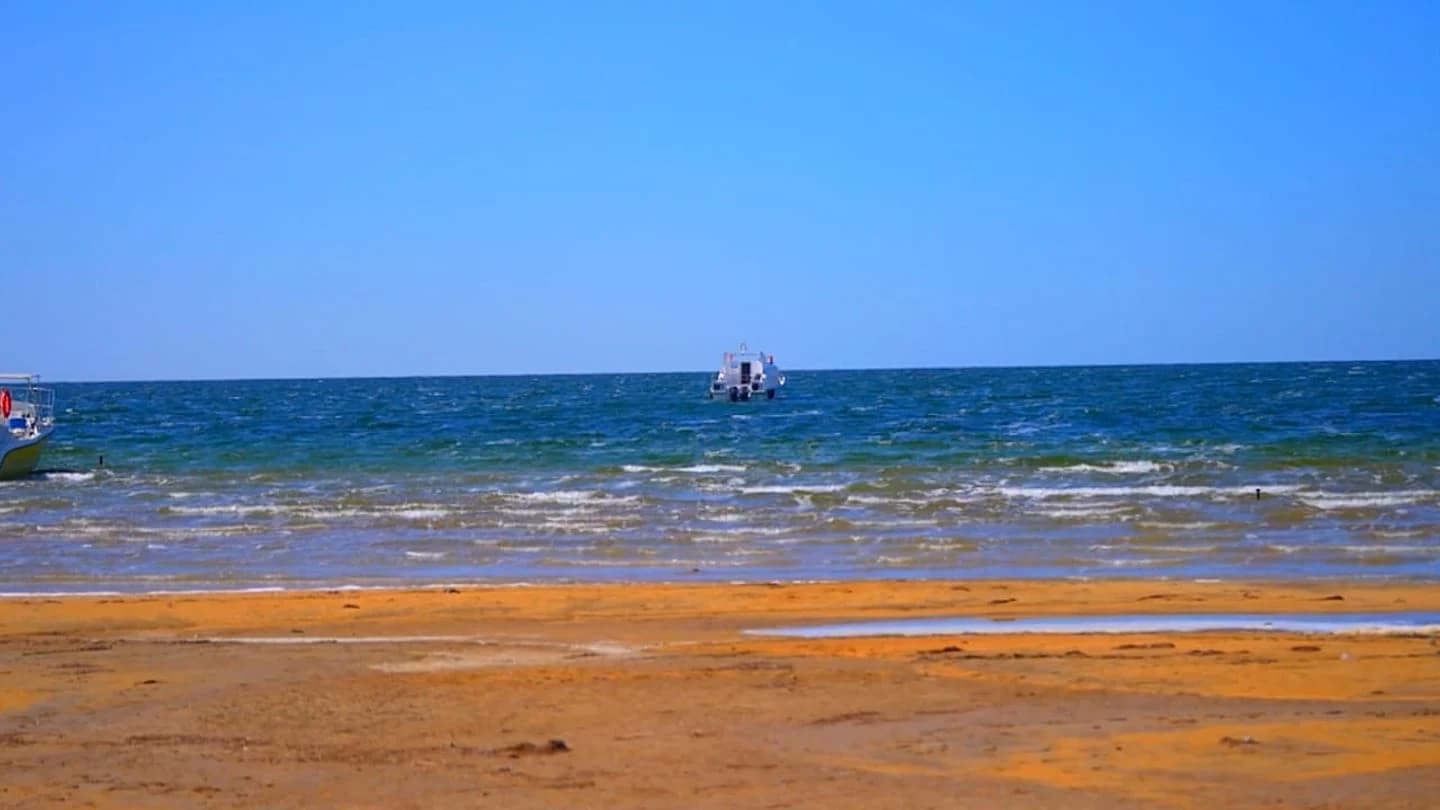
The landscape of Uzbekistan's Jizzakh Region changes abruptly: beyond the sandy expanses of the Mirzachul Steppe, a large expanse of water appears on the horizon. Lake Tuzkan — one of the largest in the country — is part of the Aydar-Arnasay lake system, one of Uzbekistan's largest inland water bodies, and lies between the Hungry Steppe and the Kyzylkum Desert. For local residents, the lakes are a source of income: fishing remains an important part of the economy of nearby communities, and tourism has provided additional earnings. Tourist Ulugbek Musulmonov told the outlet that the main reasons for his trip were nature and the healing properties of Tuzkan's water, which visitors consider rich in minerals and beneficial for health; some, according to him, hope to improve specific health problems.
Tourism on the shore of Aydarkul
On the shore of the neighboring lake Aydarkul operates the Aydarkul resort with 225 rooms accommodating up to 600 guests: classic rooms, capsule blocks, restaurants, a beach, shaded tapchan platforms, boats and other water activities. Operations manager Jamshid Karshiboev noted that in summer the resort receives large flows of guests, including from Uzbekistan, Russia and Kazakhstan. The program includes festivals and concerts on weekends, swimming and boat rides. The resort has a medical center with massage and hydromassage; guests are offered one free procedure. From here one can reach the saltier and more mineralized Tuzkan. Fishing is allowed outside prohibited periods of the year; for some guests a one-day trip turns into an overnight stay.
Transport and safety
The area's accessibility is changing: a new airport has been built in Arnasay, and in 2026 construction began on a railway line from Dustlik to the Aydar-Arnasay lake system. Tourist from the UAE Ahmad Jabir Abdulla Mohammed Al Harbi believes the airport will help present the area to a wider international audience and describes the shoreline as a place of quiet and relaxation. At the same time, the territory is still developing, and part of the planned infrastructure has not yet been commissioned. The Aydar-Arnasay recreation zone has been operating since November 2025: safe tourism service staff are on duty around the clock. According to tourist police officer Meyirbek Amirkhanov, on Saturday and Sunday the zone receives from 6,000 to 7,000 people. The territory is covered by cameras connected to the Interior Ministry's Kalkon monitoring system; the most common calls concern lost children and missing belongings — on average five to six such calls per day.
A landscape shaped by water and people
The lake itself is of natural origin, but the broader landscape has been altered by human activity: land reclamation and water management projects of the 20th century changed the region's hydrology and contributed to the formation of the Aydar-Arnasay system. As a result, an unusual landscape emerged — large bodies of water amid dry steppe and desert. Recreation zones operate along the shores: families come for the weekend, tourists swim and fish, and resorts offer accommodation and leisure. For local communities, the lakes remain part of everyday life and the economy, while for guests they are a chance to see a different Jizzakh. The flow of visitors is expected to grow once the transport projects are completed; the main attraction remains the landscape itself — water stretching to the horizon and the desert beyond it.