The key facts
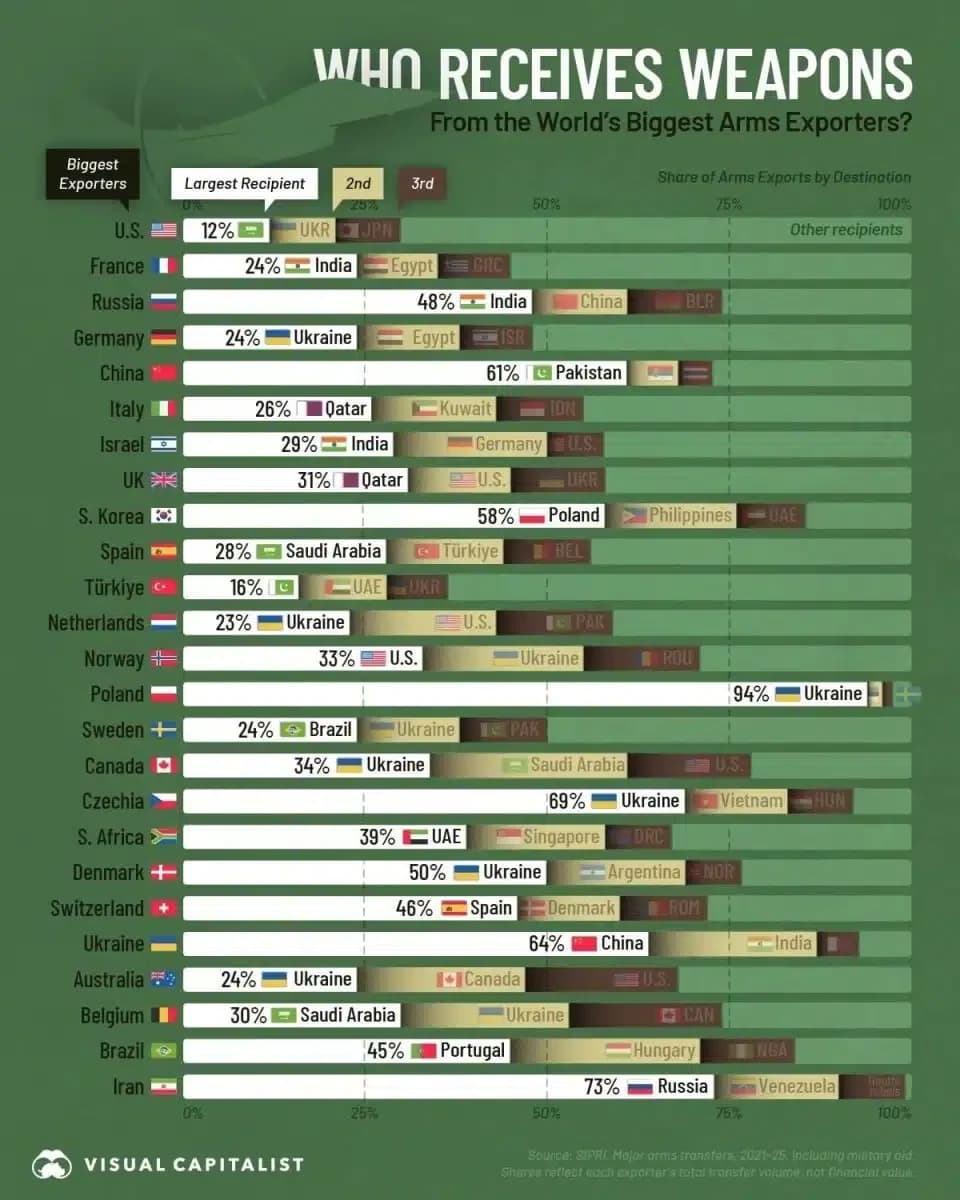
- In 2021–2025, Ukraine became the largest importer of weapons of major types, receiving them from the USA, Germany, Poland and other countries.
- Saudi Arabia ranked third in imports; 77% of its supplies were provided by the USA.
- The SIPRI ranking measures the volume of deliveries, not monetary value and not whether the weapons were used in combat.
Two approaches to arms exports
The publication Naked Science, drawing on data from the Stockholm International Peace Research Institute (SIPRI), published an overview of who supplies weapons to whom. According to the institute, two different approaches to arms exports have taken shape in the world: major exporters, such as the USA, cooperate with many countries, whereas for some states a single recipient accounts for a significant share of all exports. Such differences may be linked to decades-long military cooperation, regional security threats, or the needs of ongoing armed conflicts.
Saudi Arabia: the world's third-largest importer
In 2021–2025, Saudi Arabia ranked third in the world in imports of weapons of major types. The USA accounted for 77% of the kingdom's arms imports. Military cooperation between the two countries has a long history: American aircraft, air defense systems and other modern weaponry are used to strengthen Saudi Arabia's military capability, deter regional threats and protect critical infrastructure.
Ukraine — the largest recipient
Not all international arms deliveries are purchase-and-sale transactions: weapons, especially during active combat, are also transferred as military aid. Thus, in 2021–2025 Ukraine, which received weapons of major types from the USA, Germany, Poland and other countries, became the world's largest recipient of weapons. The deliveries serve different purposes: some replenish equipment lost in battle and expended stockpiles, while others are aimed at modernizing the army, deterring possible attacks, or building a reserve for future threats.
Limitations of the SIPRI methodology
The SIPRI ranking measures not the monetary value of weapons but the volume of delivered weapons of major types. In addition, these indicators do not reflect whether the transferred weapons were subsequently used in combat.


